Make know-how findable
Link formula versions, raw material grades, actual percentages, processes and results — and keep why something changed or was rejected.
Value now: less digging, more reuse
ML for formulation · built on your know-how
Pick several competitor products, extract and validate their ingredients, and get an F0 starting formula shaped by your own formulation habits. Every sample and change feeds the next round.
Reuse know-how first, model by category next, validate in the lab.
Machine learning FAQ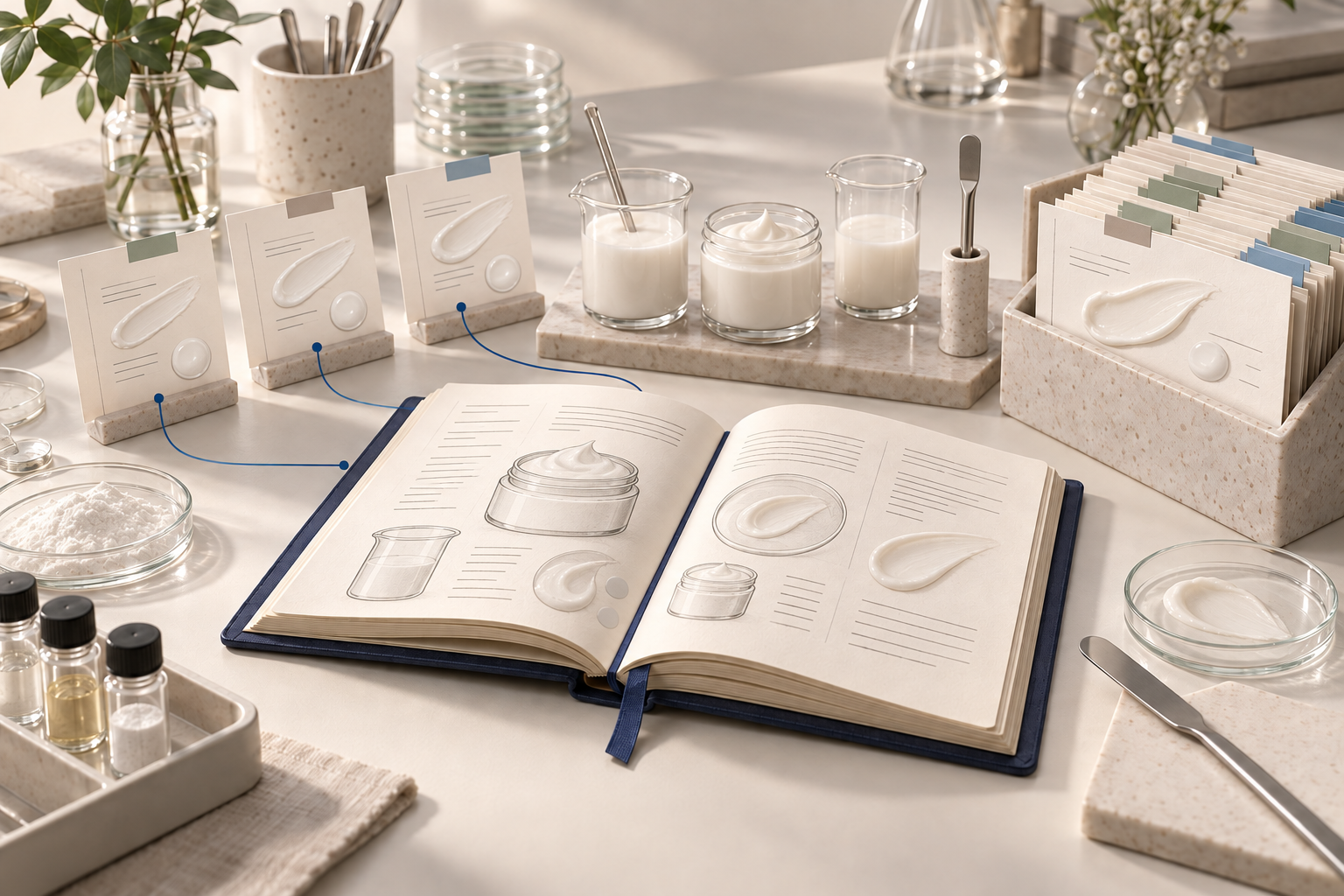 Illustrative R&D scene
From know-how to formula iteration
Connect formulas, raw materials, processes and lab results, and keep the reason behind every change. First make existing know-how searchable and reusable — then let validated machine learning narrow the next sampling round.

Link formula versions, raw material grades, actual percentages, processes and results — and keep why something changed or was rejected.
Within one category and system, model use-level reference or a measured property, and validate on cases held out from training.
Use validated references to screen candidates. Each new sampling round records changes and results, which join the know-how base after review.
Runs on your servers · R&D data protected
Real formulas, raw material compositions, batch ratios and lab records stay on your own servers. Models are trained and run locally, and your R&D know-how is managed by you.
AI organizes public information; your private formulas and lab data are never sent to external models.
01 / Why large language models
One review can praise "spreads easily at first" yet complain "still tacky two hours later." AI reads the context to separate experience, condition and wording — turning scattered comments into questions R&D can act on.
"Spreads easily at first; still tacky two hours later, and pills under sunscreen."
Extracted opinions need checking; consumer perceptions and lab measurements are stored separately.
"We want a moisturizing cream with strong hydration that's not tacky after use. Compare trial samples on these two goals first."
Clarify the brief first; the formulator then sets test methods and acceptance criteria.
"Suitable for emulsion systems. Recommended use level should be confirmed for the specific application; verify compatibility with other ingredients before use."
In real use, each point links to the original text, source and document version; missing information stays flagged.
Click to switch examples · Fictional examples, not customer data or live model output

02 / Local machine learning · formulation know-how
Formulas are your core asset. Model training and inference run entirely on your own servers, so your lab's know-how shapes every next R&D decision.
03 / From competitors to F0
Pick several competitors, extract their ingredients, validate against large-scale data and learn how ingredients are combined. Local machine learning then adds your historical habits to propose an F0 starting formula that fits your lab.
Your formulation habits are learned locally · private formulas and lab data never leave
Click this step to see how the system builds an F0 starting formula from multiple competitors, or use the left and right arrow keys.
Choose comparable creams as the target set, and set this round's direction by positioning and sensory experience.

Collect public ingredient information for the selected products; AI helps organize names, order and sources.
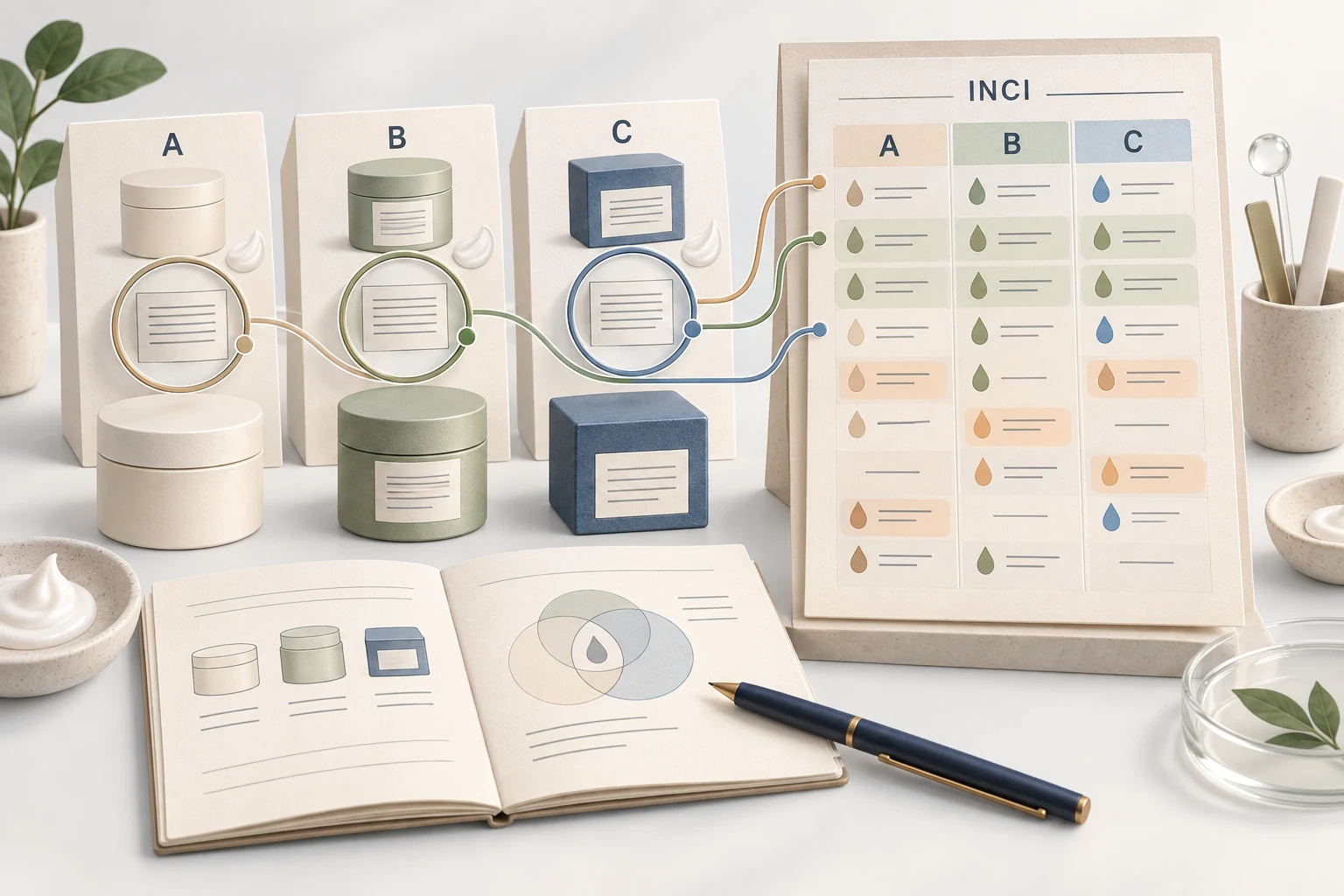
Cross-check ingredients against raw material data, and derive combination patterns and use-level references for similar products.
Ingredient names and order, applicable limits, VCRP historical use data and other use-level surveys, filing data, the INCI content of each raw material and its recommended use level all serve as references, with sources and open items kept. VCRP is one of several sources.

Learn the preferred materials, pairings and use levels in your past formulas. Training and inference run on your own servers.

Merges validated competitor data with your formulation habits into a raw material list, suggested percentages and the evidence behind them.
F0: a starting point for formulator review and sampling

Click any step to view · Illustrative scenes, not the real interface or customer data; F0 suggested percentages still require lab validation.
04 / Machine learning for formulation · FAQ
From data and security to F0 sampling — how your existing formulation know-how becomes the basis for the next round.
INCILABS product notes · Updated
Machine learning–assisted formulation learns patterns from your historical formulas, actual batch percentages, raw material compositions, processes and lab results to support material selection, use-level estimation and formula iteration. INCILABS combines it with multi-competitor benchmarking to deliver an F0 starting formula for formulators to review and sample.
No. INCILABS machine learning trains and infers entirely on your own servers. Private formulas, raw material compositions, batch ratios and lab data are never sent to external models or services. Local know-how is governed by your own permissions, and later samples and adjustments keep flowing back locally.
Select several comparable competitor products, extract their published ingredient lists and cross-check them against INCILABS ingredient, raw material and filing data. Local machine learning then applies your learned habits in material choice, pairing and use levels to propose a raw material list, suggested percentages and supporting evidence. After formulator review and sampling, changes and results are written back.
Yes — you can start from Excel formulas and lab records. Prioritize linking formula versions, raw material grades, INCI composition, actual percentages, process conditions and the matching test results. Keep the reasons behind both adopted and rejected options, flag missing fields clearly, and build up comparable R&D cases over time.
Yes. Start with one category you make often: organize its records, search similar formulas and reuse past know-how. Whether predictions can be enabled depends on the task, the number of independent cases, data quality and validation results — near-identical versions don't count as many independent samples. Validate one specific question first, then expand.
No. You can build task-specific models for use-level reference, candidate ranking or a particular measured property, without pre-training a general-purpose large model. Local deployment defines where training and inference run; what a model can do still has to be validated on your own data.
Ingredient order, applicable regulatory limits, VCRP historical use data and other use-level surveys, similar historical formulas, and each raw material's INCI content and recommended use level together narrow the candidate range. Every source keeps its origin and conditions of use. VCRP is one reference among several — a published ingredient list cannot reconstruct a competitor's actual formula.
No. F0 is a starting point for formulator review and sampling. Suggested percentages must go through actual sampling, performance and stability testing and regulatory checks, then be approved through your own process. Changes and test results feed the next round of local learning.
Within the same category and task, compare against your existing manual process: time spent searching information, time reviewing candidates, sampling rounds needed to hit the target, and validation pass rates. Test on new cases not used in training and record where it applies; the actual speed-up depends on your own validation results.
Start from the formulas and lab work you already have: capture the know-how first, then build validated local R&D capability step by step.